
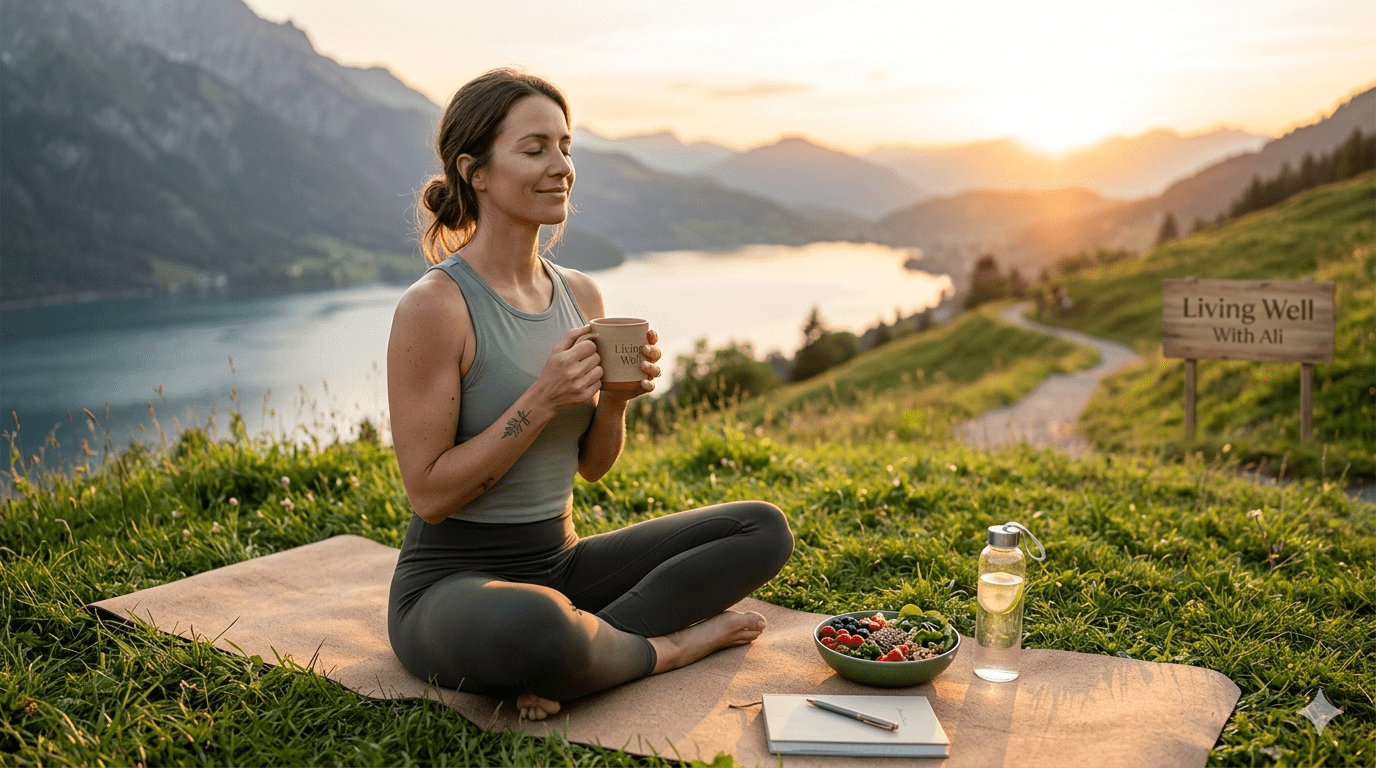
Most of us have been conditioned to think about health in one dimension — the number on the scale, the results of a blood test, or whether we made it to the gym this week. But true health is far more layered than that. It encompasses how you feel when you wake up in the morning, the quality of your relationships, the clarity of your thoughts, and the peace in your heart. At Living Well With Ali, this is the philosophy that drives everything we do.
Holistic health is not a trend. It’s a framework — one that recognizes the deep, undeniable connection between your body, your mind, and your emotions. When one area suffers, the others follow. When one area thrives, it lifts everything else with it. The goal of this guide is to help you understand what holistic health really means, and to give you five practical, actionable steps to start living it — starting today.
What Does “Holistic Health” Actually Mean?
The word “holistic” comes from the Greek word “holos,” meaning whole. In health, it refers to the practice of treating and nurturing the entire person rather than just addressing isolated symptoms or goals. Instead of asking “how do I lose 10 pounds?” holistic health asks “what does my body need to feel its best, and how does that connect to what my mind and emotions need too?”
This approach is backed by a growing body of research. Chronic stress, for example, is now known to contribute to weight gain, inflammation, weakened immunity, and cardiovascular disease — all physical outcomes rooted in an emotional and psychological cause. Similarly, poor nutrition can directly impact mood, cognition, and mental health. The systems of the body do not operate in isolation, and neither should your approach to caring for them.
At Living Well With Ali, we believe that when you invest in all aspects of your well-being simultaneously, the results are not just faster — they’re deeper, more sustainable, and more meaningful. Here’s how to get started.
Step 1: Set Clear, Meaningful Health Goals
Every transformation begins with intention. Without a clear sense of where you’re headed, it’s easy to drift — trying everything, committing to nothing, and eventually losing momentum altogether. Setting well-defined health goals is the foundation on which everything else is built.
But not all goals are created equal. Vague goals like “I want to be healthier” or “I want to feel better” are well-intentioned, but they don’t give you anything concrete to work toward. The most effective health goals share a few key characteristics.
First, they’re specific. “I want to lose weight” becomes “I want to lose 15 pounds.” “I want to eat better” becomes “I want to eat at least four servings of vegetables every day.” Specificity gives your brain a clear target and makes it far easier to measure progress.
Second, they’re realistic. Ambitious goals are wonderful — but they need to be grounded in what’s genuinely achievable for your body, your lifestyle, and your current starting point. Setting an unrealistic goal doesn’t make you more motivated; it sets you up for frustration and self-criticism when you fall short.
Third, they’re time-bound. Open-ended goals tend to stay open-ended. Giving yourself a deadline — “I want to complete a 5K in three months” or “I want to reduce my sugar intake by the end of this month” — creates accountability and a sense of urgency that keeps you moving forward.
Finally, and perhaps most importantly, make sure your goals are meaningful to you. Not to your doctor, not to social media, not to anyone else in your life. When your goals are rooted in your own values and desires, you’ll find the motivation to pursue them far more naturally than if you’re chasing someone else’s version of healthy.
Step 2: Nourish Your Body With Intention
Food is not just fuel — it’s information. Every meal you eat sends signals to your cells, your hormones, your gut, and your brain. When that information is high quality, your body responds accordingly: with energy, clarity, stable moods, and resilience. When the information is poor, the effects ripple outward in ways that go far beyond the bathroom scale.
Nourishing your body well doesn’t have to mean overhauling your entire diet overnight. Small, consistent changes made over time have a far more profound impact than dramatic short-term restriction followed by a return to old habits. Here are the principles that Living Well With Ali recommends as a starting point.
Prioritize whole foods. At its core, a nourishing diet is built on foods that are as close to their natural state as possible — fresh fruits and vegetables, lean proteins like fish, chicken, eggs, and legumes, whole grains like oats, quinoa, and brown rice, and healthy fats from sources like avocados, nuts, and olive oil. These foods are rich in the micronutrients, fiber, and antioxidants your body needs to function optimally.
Hydration matters more than most people realize. Water plays a role in virtually every physiological process — digestion, circulation, temperature regulation, cognitive function, and more. Many people walk around in a mild state of chronic dehydration and attribute the resulting fatigue, brain fog, and cravings to other causes. Aim to drink enough water throughout the day that your urine is a pale, straw-like color, and increase your intake during periods of exercise or heat.
Practice mindful eating. In our fast-paced world, many of us eat quickly, distractedly, and without much awareness of how our food tastes or how our body feels as we eat it. Mindful eating is the practice of slowing down, paying attention, and engaging fully with the experience of a meal. Research consistently shows that mindful eaters consume fewer calories, enjoy their food more, and are better able to recognize signals of fullness — making it one of the most powerful and underrated tools in the wellness toolkit.
Step 3: Make Physical Activity a Non-Negotiable Part of Your Life
Movement is medicine. This is not hyperbole — the evidence base for the physical, mental, and emotional benefits of regular exercise is among the most robust in all of health science. Regular physical activity reduces the risk of virtually every chronic disease, improves mood and cognitive function, supports healthy weight management, boosts energy levels, and even extends life expectancy.
The key word here is “regular.” Sporadic bursts of intense exercise followed by long periods of inactivity are far less effective — and far harder to sustain — than a consistent, moderate routine that you genuinely enjoy and look forward to.
Start by finding movement you actually like. This sounds simple, but it’s advice that is routinely ignored. If you dread running but love dancing, dancing is your exercise. If swimming makes you feel alive, then swim. Exercise doesn’t have to look a certain way to count. The “best” workout is always the one you’ll actually do.
Once you’ve found something that works for you, schedule it like an appointment. Research on habit formation shows that people who plan exactly when and where they’ll exercise are significantly more likely to follow through than those who simply intend to work out “at some point.” Put it in your calendar, protect that time, and treat it as non-negotiable.
For a well-rounded routine, aim to incorporate three types of movement: cardiovascular exercise (anything that elevates your heart rate and improves endurance), strength training (which preserves muscle mass, supports metabolism, and protects bone density), and flexibility or mobility work (such as stretching or yoga, which improves range of motion and reduces injury risk). You don’t need to do all three every day — but weaving them into your week ensures your body stays strong, capable, and balanced.
Step 4: Invest in Your Mental and Emotional Wellness
This is the step that too many wellness plans leave out entirely — and it’s often the one that makes the biggest difference. Your mental and emotional state is not separate from your physical health. It’s inseparable from it. Chronic stress, anxiety, loneliness, unprocessed grief, and negative thought patterns all have measurable physical consequences. Caring for your mind is caring for your body.
Mindfulness practices — including meditation, breathwork, journaling, and yoga — have been shown to reduce cortisol levels, lower blood pressure, improve sleep quality, and decrease symptoms of anxiety and depression. You don’t need to meditate for an hour a day to see benefits. Even five to ten minutes of intentional stillness and breath awareness can meaningfully shift your stress response over time.
Social connection is another pillar of mental wellness that often gets overlooked in an age of digital communication and increasing isolation. Humans are wired for connection, and meaningful relationships are one of the strongest predictors of longevity and happiness in the research literature. Prioritize spending time with people who energize and support you, and don’t be afraid to ask for help when you need it.
Pay attention, too, to how you talk to yourself. The internal voice that narrates your life — the one that judges your choices, compares you to others, and tells you whether you’re succeeding or failing — has an enormous influence on your well-being. Practicing self-compassion, which means treating yourself with the same kindness and understanding you’d offer a good friend, is not a soft skill. It’s a measurable contributor to resilience, motivation, and long-term mental health.
Finally, be intentional about where you direct your attention. Excessive screen time, particularly on social media, has been linked to increased rates of anxiety, depression, and distorted body image. Setting boundaries around technology — even small ones, like keeping your phone out of the bedroom or taking a one-day digital break each week — can have a surprising impact on your clarity, mood, and sense of peace.
Step 5: Seek Guidance, Community, and Support
One of the most common misconceptions about wellness is that it’s a solo endeavor — that if you’re struggling, it means you’re not trying hard enough, or that asking for help is a sign of weakness. In reality, the opposite is true. The most successful people on any health journey are almost always those who are willing to seek support, learn from others, and surround themselves with a community that shares their values and goals.
At Living Well With Ali, we offer a range of resources designed to meet you exactly where you are. Our wellness workshops bring together like-minded individuals who are committed to improving their health and well-being, creating a space for shared learning, accountability, and encouragement. There is something uniquely powerful about being in a room — or a virtual space — with others who understand what you’re working toward.
For those who want more personalized attention, our one-on-one health coaching sessions offer a tailored approach to your specific goals, challenges, and circumstances. A good coach doesn’t tell you what to do — they help you discover what works for you, hold you accountable to your own intentions, and provide the expert knowledge and encouragement to keep you moving forward even when things get hard.
We also provide an extensive library of guides, meal plans, workout resources, and educational content to support you between sessions and workshops. Our goal is to give you not just answers, but the tools and understanding to make empowered decisions about your health for the rest of your life.
The Wellness Journey Is Ongoing — And That’s a Good Thing
Holistic health is not a destination you arrive at and then maintain effortlessly forever. It’s a practice — a daily, evolving commitment to listening to your body, honoring your mind, and making choices that reflect your values and support your long-term well-being.
Some days will be easier than others. Progress is rarely linear. There will be setbacks, plateaus, and moments of doubt. What matters is not perfection, but direction — that each day, in some small way, you are moving toward the version of yourself that you’re working to become.
At Living Well With Ali, we are honored to be part of that journey. Whether you’re just beginning to explore what holistic health means or you’re looking to deepen a practice you’ve already built, we’re here — with the knowledge, the tools, and the genuine care — to walk alongside you every step of the way.
Your well-being is worth every effort. Let’s build it together.